
It all started with a beaver.
It appeared, from somewhere in the marsh behind our house. It built a dam just in front of the culvert that carried marsh water downstream, and water levels started to rise. On our property alone, we lost about ¼ acre of land to rising water levels, and the beaver sampled our alder trees aggressively. We had a lot of downed trees and gnawed off stumps in our back 40. But we didn’t mind—it was just nature, doing its thing.
But someone must have complained, because the municipality came and, instead of just removing the dam itself, also put in a culvert.
The entire marsh drained almost overnight. Had I wanted to, I could have walked out onto its sediment-laden floor, the willows abandoned as so many islands in a dry landscape. I didn’t hear the red-winged blackbird anymore. The ducks that used to splash in the water and honk incessantly were gone. The groaning creak of the heron’s call was long gone. The Canada geese no longer stopped over on their way south. I was already worried about next spring, and not hearing the frog chorus. And I mourned in advance the loss of dragonflies in summer.
All because of a beaver.
When we first moved back to the Island we rented a house in Black Creek. There was a beaver dam around the corner from our landlord’s acreage. Our landlords would regularly destroy the dam, which flooded the bottom of their property. As tenants, we didn’t mind the beavers. We thought they should be left alone—but it wasn’t our land being flooded.
Even when it was our land, we thought the beavers should be left alone. They’re a natural part of the ecosystem. In fact, they’ve nicely coppiced the alder trees they were felling:
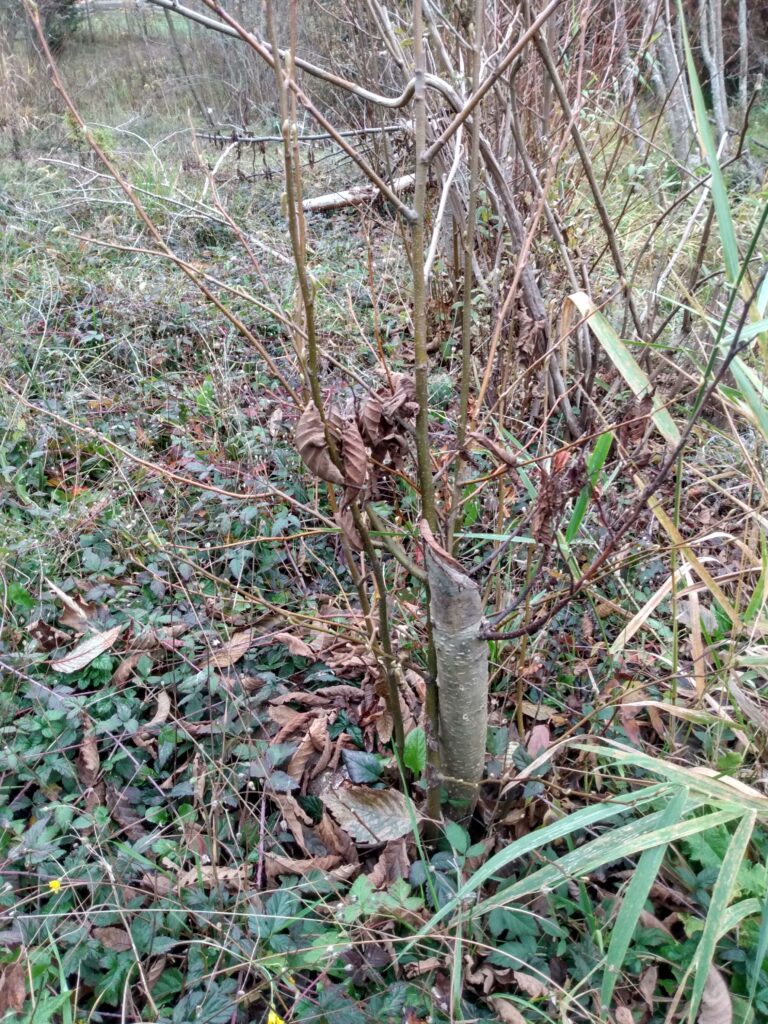
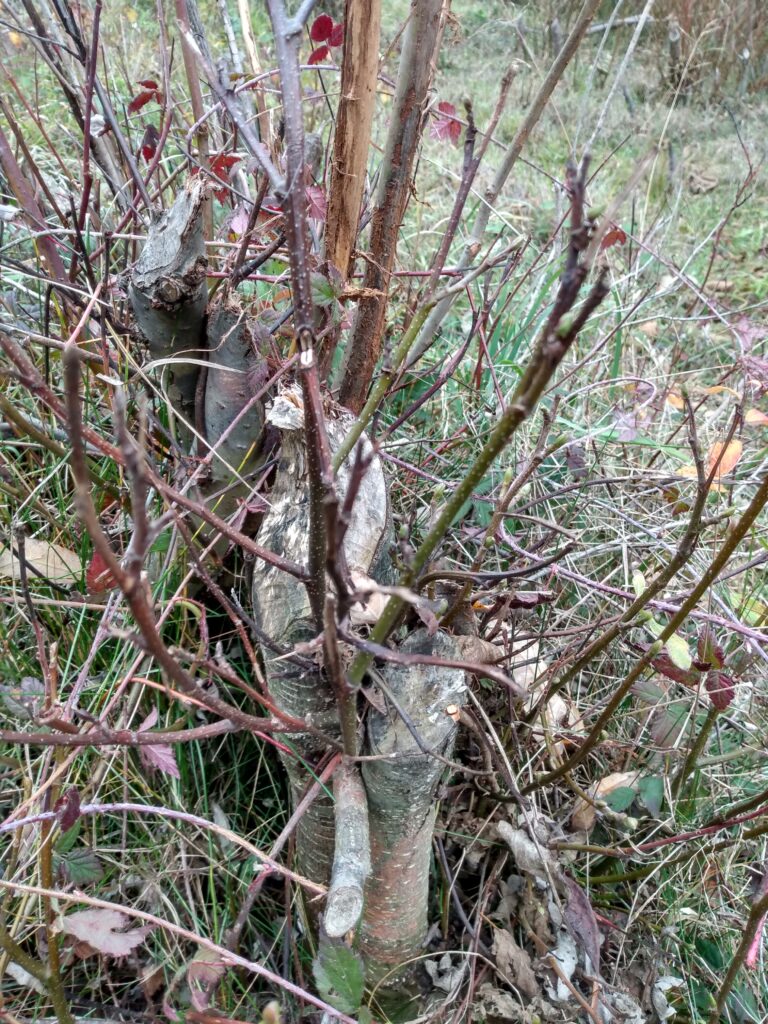
Given the water backing up onto peoples’ property, I imagine someone complained to the municipality. Municipality workers came and installed a culvert to drain the marsh. When I went down to my backyard to check the water levels, the marsh was dry. If I wasn’t worried about the sucking clutch of mud, I could have walked out to the middle of the marsh without getting my feet wet. It had well and truly drained.
But I heard the ducks honking and splashing again the other morning so went to check the water level after a week of rain, and was shocked to see that it had increased significantly—almost reaching the shoreline on our property. Either the rain filled it up again, or the beaver came back to build their dam. If the rain filled it up, I would expect the water to flow out of the culvert again. I was cautiously optimistic that the beaver dam was back.
Bearing witness to that original drainage of the marsh made me feel I had to tell someone about it. Devastation can’t be observed in a vacuum. Maybe it’s like that with any disaster: hurricanes, climate change, wildfire. We have to share it to get the unbearable weight off our chests. In my case, I talked to my friends. They understood the loss of the beaver as keenly as if it had happened in their backyard.
Yesterday I took a little field trip to where the marsh drains under the road. I was surprised by what I saw. The municipality had just carved a channel out to the left of the beaver dam and installed a relatively small culvert under the road. Two bales of hay were in the middle of the outgoing stream, likely to capture any sediment in the water. On the other side of the road, water trickled out of the small culvert into a tiny stream. It didn’t look as though a huge flood had come through that would explain the dry marsh.
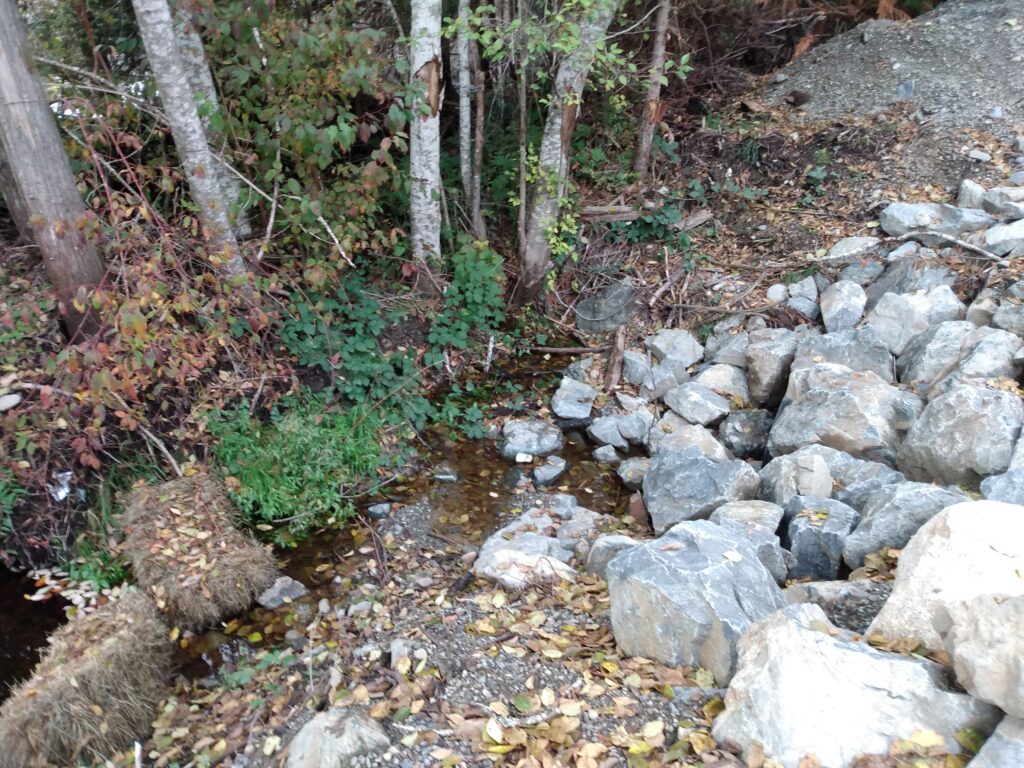
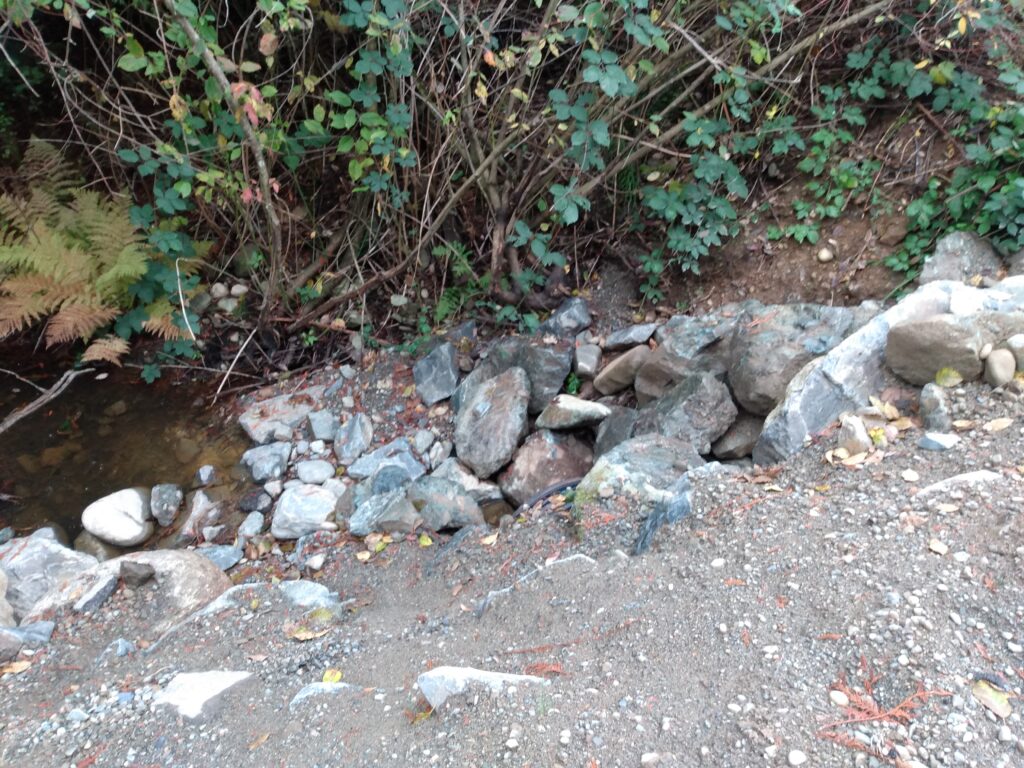
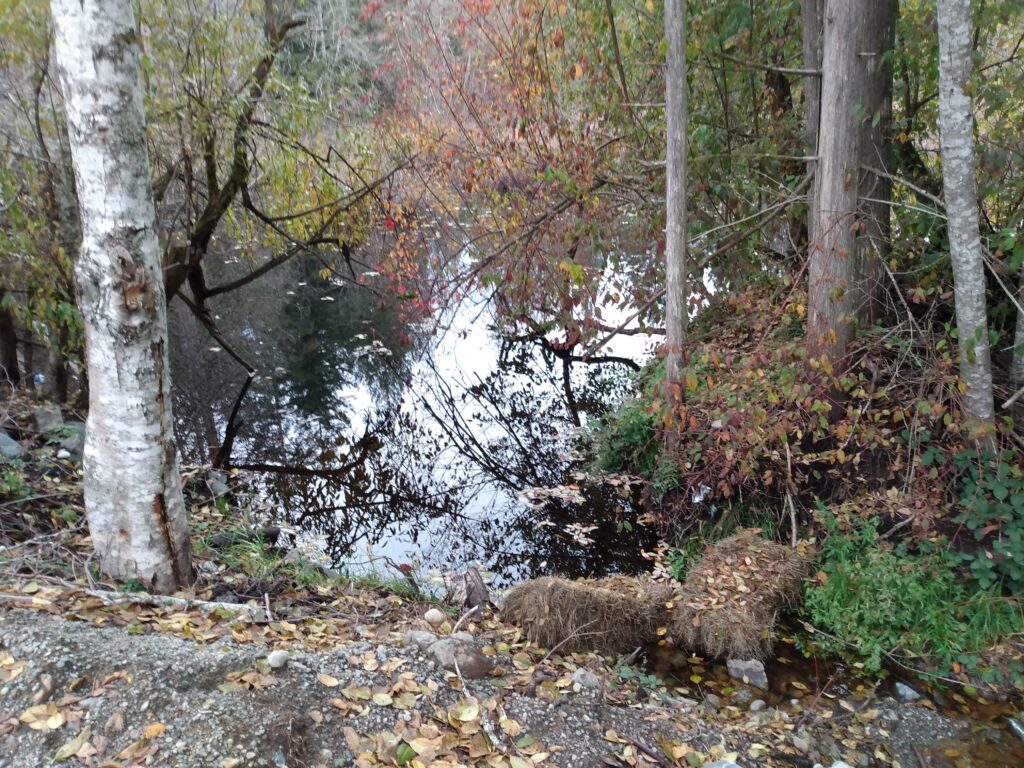
I’m baffled. Why did the marsh drain so much? Did the municipality pump it out to work on the culvert? How did the water level rise again – was it all the rain we’ve had lately? Why did they install such a small culvert? Will the beavers come back and repair their dam, since most of it is still there?
Maybe this story ends with a beaver, returning home. I’ll keep you posted.


Rooting for the beaver!
Me, too!
Viva la beava!
Yeah!