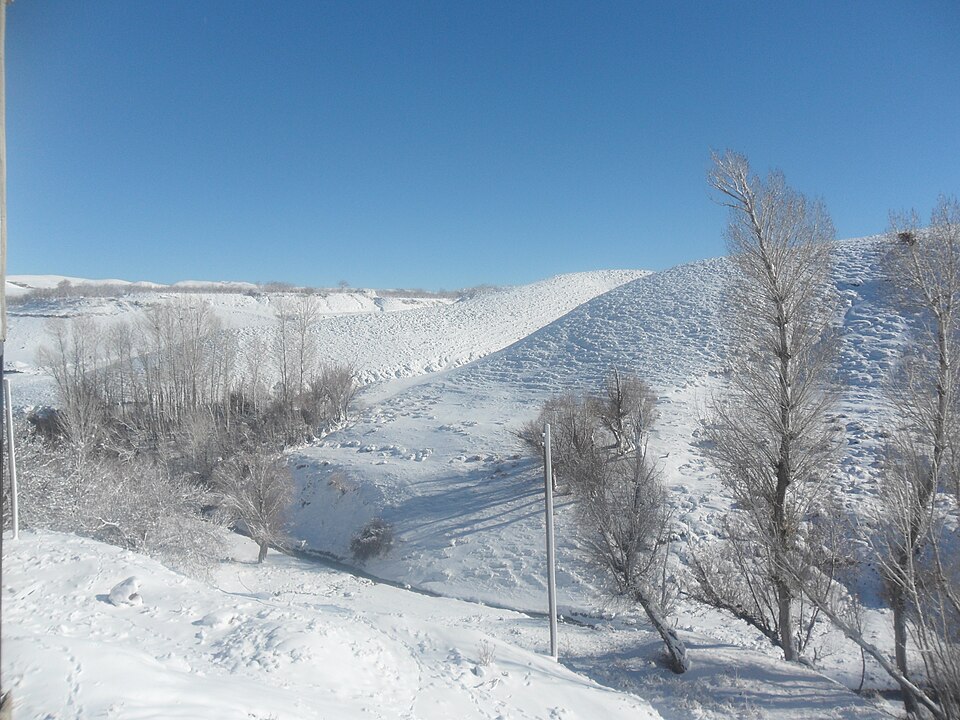
When I left Lethbridge I didn’t have any good memories of the place. All I could see were the bad ones, that went along with the landscape and the people. But the farther I got from there, the more I realized its subtle beauty.
The southern Alberta landscape is flat. Very flat. Until you descend into the river valley. There, coulees fold down to the river, the prairie grasses on their backs waving in the wind. Coyotes hide in the creases of the hills, and the sudden chatter of a rattlesnake just off the trail is a reminder to pay attention. Porcupine and skunk also frequent these hills, sometimes making their way into the backyards of people living on the coulee edges.
The university is an Arthur Erickson edifice, the same architect who built Simon Fraser University in Burnaby. At first I thought it didn’t fit in, but then I looked at it from a distance and realized it was the perfect juxtaposition of a blocky building against the sinuous coulees. Erickson said he got some of his inspiration from the Lethbridge Viaduct (train trestle), which I can understand because it’s a long, straight structure that rises out of the coulees while the university is a long, straight structure that nestles into the coulees.
I walked this landscape for seven years—two of those after I got ill. Before I got ill, we had two dogs: Tsuga and Jasper. Tsuga was a German shepherd cross, and Jasper a black flat-coated retriever. It was through them that we explored the city’s landscapes, especially the coulees where the dog parks were located.
The dogs loved to visit the Scenic Drive dog run, along the east bank of the Oldman River. We would take them on an hour- to two-hour long loop through the coulees, summer and winter. One coulee was populated by a cottonwood forest, the main species of tree that grew in the city and along the waterways. It must’ve been a bit damp for the cottonwoods to grow there. They’re drawn to water, and grow quickly. They also drop yellow sticky buds in the spring, which stick to everything (including dog feet) and leave yellow marks everywhere.
We would walk in all weather, except sometimes when it was raining, which happened mainly during the June monsoon. The wind was almost constant, ratcheting up to 100km/h on some days, so strong that it pushed against your lungs and made it difficult to draw breath.
—
Winter was a tricky time of year in Lethbridge. The wind sculpted the snow into deep drifts—one formed across our driveway, leaving the main part completely snow-free but blocking the path from the house to the driveway. It also polished blowing snow into a fine skin of black ice on the highways, leaving multiple cars in the ditch. It was terrible for tractor-trailers, which were tipped over by the westerly winds. You knew it was going to be a bad day on the highway when the wind was up.
Our dog-walking was also affected by winter conditions. In winter the coulee trails were icy from the snow and packed by foot traffic. It was easy to slide down a hill on a slick stretch of trail. Once Jasper lost one of his boots in a snowdrift, but found it again on a subsequent visit. Smart dog, that one.
The dog run at Popson Park, along the west bank of the Oldman River on the south side of town, often had several huge drifts across the access road that the city didn’t plow. So, we would park the truck at the top of the road and plod our way through the snow, sometimes sinking as deep as our thighs. The dogs scampered up and down the drifts, as they were light enough to be held by the thin surface crust. Once we reached the park, we were the only people there; no one else wanted to tackle the drifts.
We also walked the coulees around the west end of town, on the 40 acres where my university mentor lived. We would leave her house and cross a stubbled winter field, tucked down in our winter jackets, scarves, toques, and gloves. The wind was an unwelcome visitor, increasing the risk of frostbite significantly. The dogs leaped around with S’s dogs, but didn’t follow them when they ran across the coulees to investigate a deer they’d seen from a distance. Our walk took us down to the banks of the river, but sometimes we didn’t get there fast enough for Jasper. One time he scrambled down the near-vertical cliff to the water’s edge, then not only had a little swim but climbed back up again! We were sure he had injured himself with such antics, but he was perfectly fine.
What I wouldn’t give to have him and Tsuga back again.
—
With the distance of time, I remember these places fondly, especially as moments with our dogs. They were such an integral part of our family that the majority of our memories from the last 20 years include them. Sometimes I think I’m romanticizing our years in Lethbridge; I know that the university wasn’t the ideal place to work and the landscape away from the river valley was flat as far as you could see. But perhaps one day I’ll return for a brief moment and wander the coulees, searching for coyotes and rattlesnakes.


